

Donburi Explained: Japanese Rice Bowls and Their Main Variations
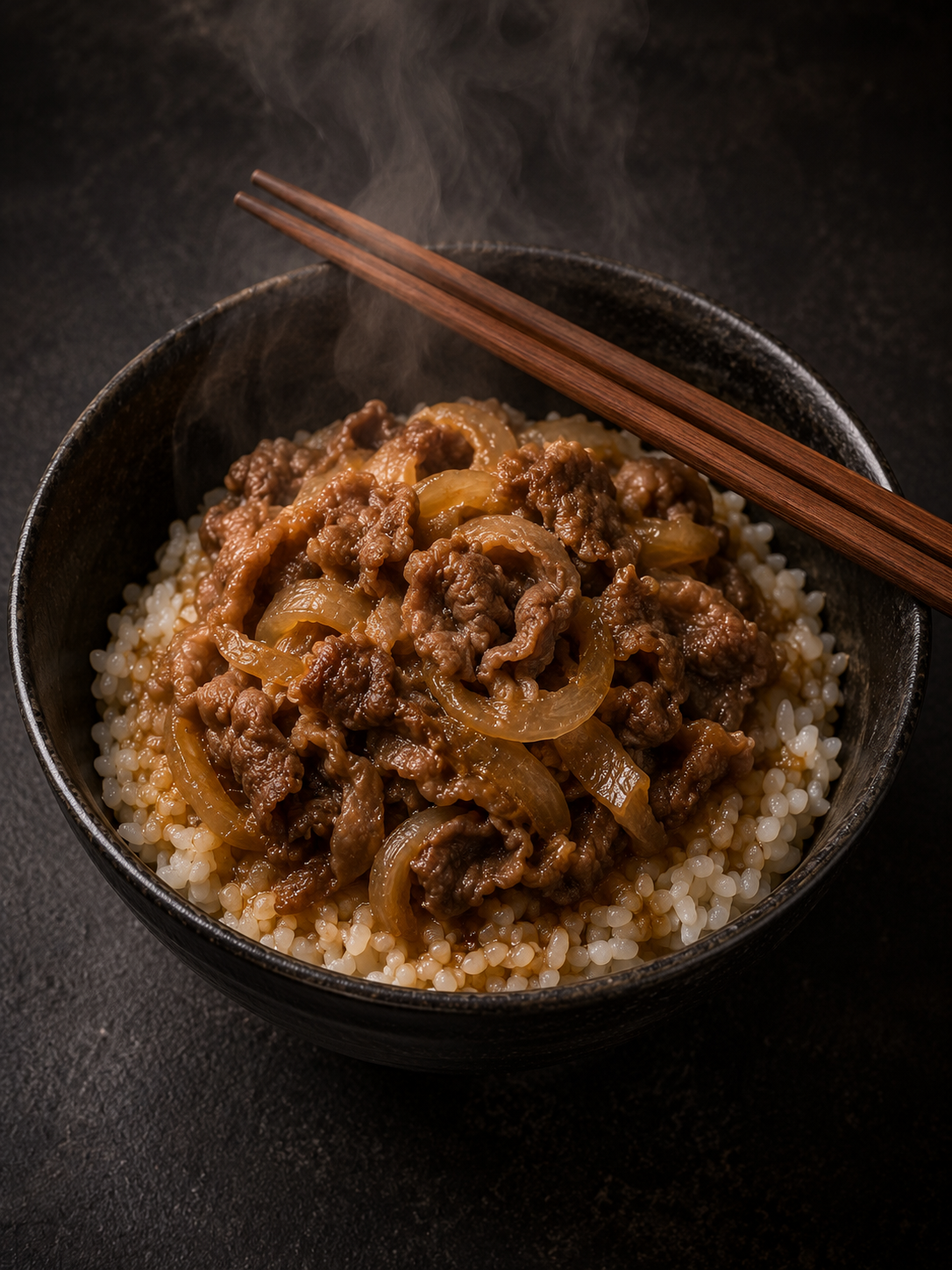
Donburi is the least complicated category on a Japanese menu and the one most likely to be skipped over. It is a bowl of rice with something on top. That description sounds like it barely qualifies as a dish, which is why it takes a while to notice how much thought goes into the good ones and how far apart two bowls in the same category can sit.
The meaning behind the word
Donburi meaning is straightforward: it is the word for a deep ceramic bowl. Over time the name of the vessel became the name of what goes in it, which is how the dish ended up named after its own crockery.
In practice the word gets shortened. Attached to the end of another word it becomes don, which is why the menu reads gyudon and katsudon rather than gyu donburi and katsu donburi. Anything ending in don is a rice bowl, and the part before it tells you what is on top.
What holds the category together
Anyone asking what is donburi usually wants to know where the boundary sits, since plenty of Japanese dishes involve rice. Three things define it.
One bowl, not a plate and a side
The rice and the topping share a vessel and are eaten together in the same mouthful. This is the part that separates a donburi from a set meal, where rice arrives in its own bowl beside the main dish and the two stay apart.
The sauce does the joining
Most donburi are built around a cooking liquid made from soy, mirin, sake and dashi. The topping is cooked in it, and enough of it runs down into the rice to season the grains underneath. That soaked layer is the point of the dish. A topping that sits dry on plain rice is technically a bowl of food and not really a donburi.
Plain rice, not sushi rice
Donburi uses steamed short grain rice with nothing added. This is worth stating because the confusion with chirashi comes up often. Chirashi looks similar, fish scattered over rice in a bowl, but it is built on vinegar seasoned sushi rice, which puts it in a different category despite the resemblance.
The main styles
The table below covers the bowls that appear most often, and it doubles as a rough guide to how heavy each one eats.
| Name | What goes on the rice | How it eats |
| Gyudon | Thin sliced beef simmered with onion | Sweet and savory, the everyday standard |
| Oyakodon | Chicken and egg cooked together in broth | Soft and mild, the egg binds the whole bowl |
| Katsudon | Breaded pork cutlet, egg and onion | Heavier, with crisp edges softening into the sauce |
| Tendon | Assorted tempura brushed with sauce | Crisp against soft rice, richer than it looks |
| Unadon | Grilled and glazed freshwater eel | Smoky and sweet, one of the richer bowls |
| Tekkadon | Sliced raw tuna | Cold and clean against room temperature rice |
| Kaisendon | Mixed raw seafood | Varies piece by piece, closest to sashimi over rice |
Cooked and raw sit in the same category
Half the list is simmered or fried and half is served cold with raw fish, and both are donburi. The rice underneath is the constant. What changes is the temperature and what the sauce is doing.
In a cooked bowl the sauce is hot and soaks in during cooking, which softens the top layer of rice and blurs the line between topping and base. In a raw seafood bowl the rice is closer to room temperature, the fish is cold, and the seasoning is spooned or brushed over at the end rather than cooked into it. The second style keeps the two layers distinct rather than merging them.
Why the bowl shape matters
The deep sided bowl is not just tradition. Depth keeps heat in, which matters for a dish that arrives with hot topping over hot rice and is eaten slowly. It also holds the sauce at the bottom instead of letting it spread across a flat surface and cool.
It changes the eating angle as well. A donburi is designed to be lifted, held close, and eaten with chopsticks pulling from the top down, so each mouthful carries a mix of topping, sauce and rice rather than working through one layer at a time.
Where it sits in a meal
Donburi is a complete meal rather than a course. It shows up at lunch far more than at dinner, and in Japan it fills the same role a sandwich does elsewhere: fast, filling, cheap enough to eat regularly, and available almost everywhere.
That does not cap the quality. The same format supports both a five minute counter bowl and a slow cooked eel bowl that costs several times as much, because the structure is flexible and the cost lands entirely in the topping.
Building a bowl at home
The structure is easy to copy. Cook short grain rice, make a simmering liquid from soy, mirin, sake and a little sugar, and cook the topping in it until the liquid has reduced enough to coat rather than pool. Spoon it over the rice while both are hot so the sauce runs down through the grains.
The mistake most people make is reducing too far. A donburi needs enough liquid left to season the rice underneath, and a topping that has cooked down to a glaze sits on the surface without reaching anything. Pull it off the heat while it still moves in the pan.
How to eat it
Lift the bowl. Setting it on the table and leaning over it is the harder way to eat this dish, and the shape assumes it will be held. Work from the top down and take some rice with every mouthful rather than clearing the topping first, since the topping alone is seasoned strongly enough that it needs the rice to balance out.
Do not add soy. The sauce already in the bowl was measured for the amount of rice underneath, and extra salt on top of a dish built around a soy based liquid pushes it well past where it was meant to land.