

Nigiri and Sashimi: The Real Difference Between Two Raw Fish Classics
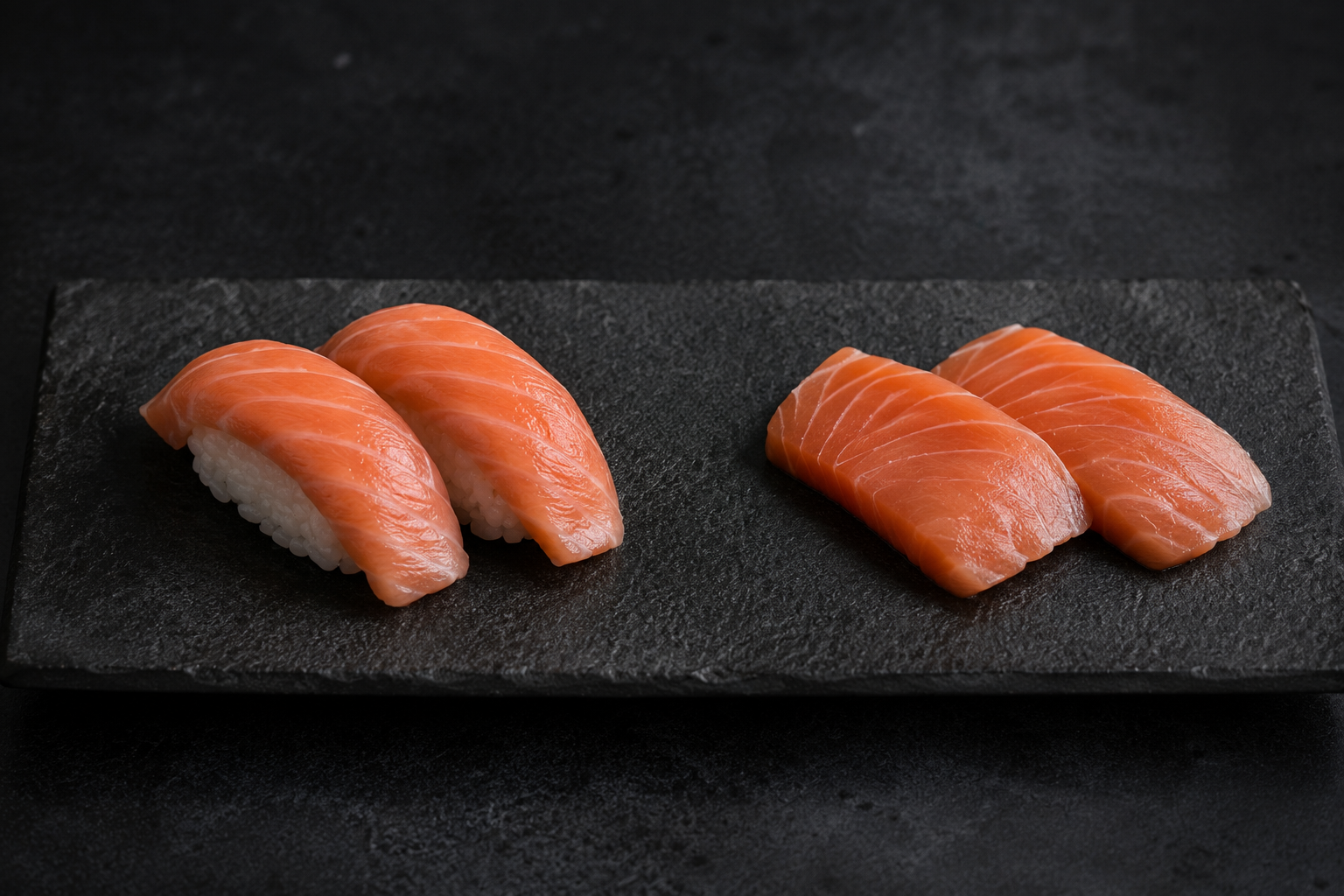
Two plates arrive at a Japanese counter. One holds slices of raw fish resting on small mounds of rice. The other holds slices of raw fish and nothing else. That gap, one ingredient wide, is the entire answer to nigiri vs sashimi. That is the whole of the difference between nigiri and sashimi, and it sounds minor until you notice how much it changes: the way the fish is cut, the temperature it is served at, the seasoning it carries, and even how you are meant to pick the piece up.
The one ingredient that separates them
Nigiri is fish served over seasoned rice. Sashimi is fish served on its own. Ask about sashimi vs nigiri and that is the difference in a single line, and it is worth holding onto, because nearly every other distinction between the two follows from it.
Rice is not a neutral base. It is seasoned with vinegar, salt and a little sugar, and it is served close to body temperature rather than cold. Put a cool slice of fish on top of warm rice and the fat in that fish softens slightly on contact. Take the rice away and the fish stays cold from the refrigerator to the plate. Same fish, two different textures on the tongue.
What nigiri actually is
The name comes from the Japanese verb for gripping or pressing. A chef takes a small amount of rice, presses it into a loose oval in the palm, adds a thin smear of wasabi, and drapes a slice of fish across the top. The whole thing is built to be eaten in one bite.
Pressure is the skill. Press too hard and the rice turns into a dense block that sits heavy. Press too lightly and the piece falls apart before it reaches your mouth. A well made piece holds together on the way from counter to hand, then breaks apart the moment it hits your tongue.
Why the fish is often already seasoned
Many pieces reach you finished. A brush of soy, a squeeze of citrus, a pinch of salt, a quick pass under a torch. This is deliberate. The chef knows how much seasoning that particular cut needs, so the piece is meant to be eaten as it arrives rather than dipped again. If something comes with instructions, following them usually gives a better result than the habit of dunking everything in soy.
What sashimi actually is
Sashimi removes the rice and puts all the weight on the fish and the knife. There is nothing to hide behind, which is why sashimi is the honest test of a kitchen. Poor fish looks fine wrapped in a roll. It has nowhere to go on a bare plate.
Cut style shifts with the texture of the fish. Soft, fatty fish like salmon and tuna gets thicker rectangular slices, since the flesh yields easily and a thin slice would collapse. Firm white fish gets sliced much thinner, occasionally thin enough to read through, because a thick piece would eat rubbery. Some fish is cut into small cubes instead.
What comes alongside is functional rather than decorative. Shredded daikon resets the palate between pieces. A shiso leaf adds a sharp herbal note. Wasabi is meant for the fish itself rather than for stirring into the soy dish, where it loses most of its heat within a minute.
Where sushi fits into all of this
The most common mix up is nigiri vs sushi, and the confusion comes from an English language habit. In everyday use, sushi has come to mean raw fish. In Japanese it means the seasoned rice.
Follow that definition and everything sorts itself out. Nigiri has rice, so nigiri is a type of sushi. Rolls have rice, so rolls are sushi. Sashimi has no rice, so sashimi is not sushi at all. A plate of sashimi ordered at a sushi restaurant contains no sushi, which reads as a contradiction until the rice rule is applied.
How each one is eaten
Nigiri is fine to eat with your hands, and many people find it easier that way, since chopsticks tend to squeeze the rice out of shape. If you are dipping, turn the piece and touch the fish to the soy rather than the rice. Rice soaks up liquid and falls apart, and it drowns the flavor you paid for.
Sashimi is a chopstick dish. Dip lightly on one edge. If you want heat, place a small amount of wasabi directly onto the slice rather than mixing it into the dish.
Which one to order
If you are trying a restaurant for the first time and want to know how good the fish is, order sashimi. Nothing softens the answer. If you want balance in each bite and a meal that feels more complete, order nigiri, because the rice fills in around the fish rather than leaving it exposed.
Ordering both works better in a particular sequence. Sashimi first, while your palate is clean and unaffected by vinegar and rice. Nigiri after. Reversing that order makes the sashimi read flat, since the seasoned rice has already set a baseline your mouth is measuring against.
Side by side
The table below sums up the practical differences.
| Nigiri | Sashimi | |
| Rice | Yes, seasoned and hand pressed | None |
| Cut | Sized to sit over the rice, often on an angle | Cut for its own sake, usually thicker |
| Seasoning | Often finished by the chef before serving | Seasoned by the guest at the table |
| Eaten with | Hands or chopsticks, in one bite | Chopsticks |
| Counts as sushi | Yes | No |
| Served at | Room temperature rice, cool fish | Cool throughout |
Neither dish is the more advanced version of the other. They are two ways of presenting the same ingredient, one with rice supporting it and one without. Knowing which is on the plate in front of you is enough to eat both the way they were meant to be eaten.