

Nigiri Explained: The Hand Pressed Style of Sushi
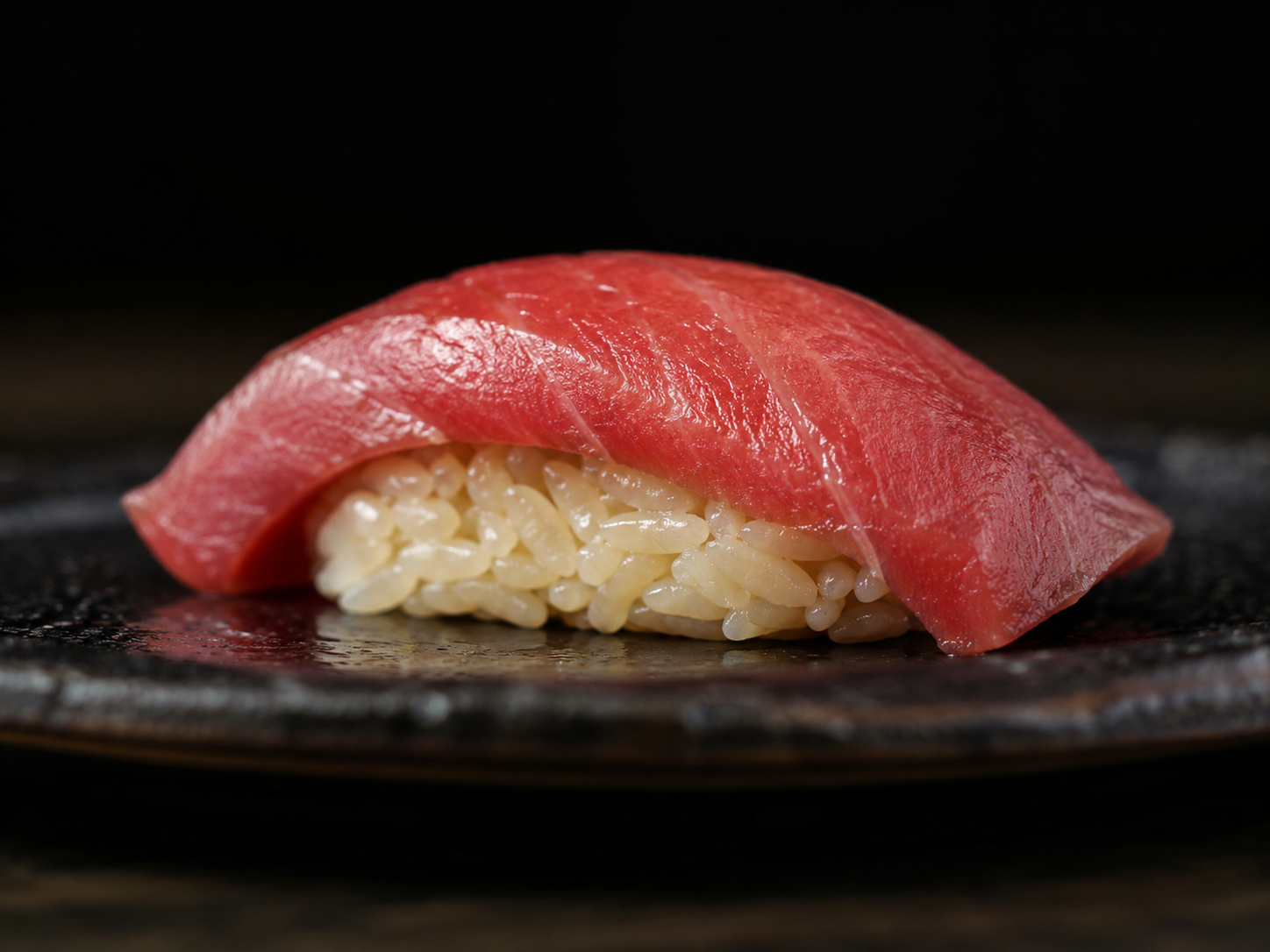
A piece of nigiri looks like it should take five seconds to make. A small oval of rice, a slice of fish laid across it, nothing else on the plate. Watch someone who has been doing it for twenty years and the same piece takes about eight seconds, and almost all of that time goes into things you cannot see once it reaches you. Anyone asking what is nigiri gets a short answer and a long one, and the long one is where the dish actually lives.
The meaning behind the name
Nigiri meaning traces back to the Japanese verb nigiru, which is to grip or to press. The full name is nigirizushi, hand pressed sushi, and it describes the method rather than the ingredients. Rice is gathered in the palm, shaped with the fingers, and topped. No mold, no mat, no board.
The style is younger than most people assume. It appeared in Tokyo in the early nineteenth century as fast food sold from street stalls, built to be eaten standing up in a few bites. The refinement came later. The format was always about speed and the hand.
What goes into a single piece
Three components, and each one is doing more work than it appears to.
The rice
Short grain rice is cooked, then folded with a mix of vinegar, salt and sugar while still hot so the seasoning absorbs evenly. It is held near body temperature rather than chilled. That warmth matters. Cool fish against warm rice softens the fat in the fish slightly at the point of contact, and that softening is a large part of why a good piece tastes the way it does.
Portion size is small and consistent, usually somewhere between fifteen and twenty grams. Enough to support the fish, not enough to bury it.
The wasabi layer
A thin smear of wasabi sits between the rice and the fish on most pieces. It is there for balance rather than heat, and because it is enclosed, the sharpness stays in place instead of evaporating the way it does when wasabi is stirred into a dish of soy.
The fish
The slice is cut to fit the rice, which means the knife work starts from the size of the piece and works backward. Cuts are usually taken on an angle so the slice drapes over the rice rather than sitting flat on top of it. Fattier fish gets cut slightly thinner than you might expect, since a thick slice of something rich overwhelms the rice underneath.
How a piece is formed
Pressure is the entire skill. Too much and the rice compacts into a dense block that eats heavy and takes the flavor of the fish down with it. Too little and the piece collapses somewhere between the counter and your mouth.
The target is a piece that holds its shape while it travels and then falls apart the moment it lands on the tongue, releasing the individual grains. That is why nigiri made in advance and refrigerated never reads the same. Cold hardens the starch in the rice and the piece loses the quality it was built for.
Why nigiri counts as sushi
The phrase what is nigiri sushi comes up because the two words look like they might mean different things. They do not. Sushi refers to the seasoned rice, not to raw fish, so anything built on that rice is sushi. Nigiri has rice, which makes it a type of sushi. Rolls have rice, which makes them sushi as well. Sashimi has no rice, so it sits outside the category entirely despite being served in the same restaurants from the same fish.
Common toppings
The list below covers the pieces that appear most often, along with how each one tends to eat.
| Topping | Japanese name | How it usually eats |
| Salmon | Sake | Soft and fatty, one of the easier starting points |
| Lean tuna | Akami | Firm and clean, very little fat |
| Fatty tuna | Toro | Rich and soft, close to melting |
| Yellowtail | Hamachi | Buttery with a slightly firm bite |
| Sea urchin | Uni | Creamy and sweet, served in a seaweed wrap |
| Freshwater eel | Unagi | Cooked and glazed rather than raw |
| Shrimp | Ebi | Cooked, mild and slightly sweet |
| Egg omelette | Tamago | Cooked and lightly sweet, often served last |
Not everything on a nigiri plate is raw. Eel is grilled and glazed, shrimp is cooked, and the egg omelette is a cooked piece that traditionally closes a meal and doubles as a way to judge a kitchen, since it is difficult to make well and impossible to hide.
How to eat it
Hands are fine and often better than chopsticks, which tend to squeeze the rice out of shape. Pick the piece up, turn it, and touch the fish side to the soy rather than the rice. Rice absorbs liquid immediately, falls apart in the dish, and carries far more salt than the piece needs.
Eat it in one bite. Nigiri is sized for that, and splitting a piece in half breaks the ratio between rice and fish that the whole thing was built around. If a piece arrives already brushed with sauce, torched or finished with salt or citrus, it is meant to go straight in without any dipping at all.
Where it sits against the alternatives
Nigiri is the middle ground between a plate of plain sliced fish and a rolled piece with several ingredients competing inside it. There is enough structure to make a full bite and few enough components that the fish still leads. That balance is the reason it has stayed the standard format at a sushi counter for two hundred years while almost everything around it changed.