

Omakase Meaning: What It Is to Leave the Choice to the Chef
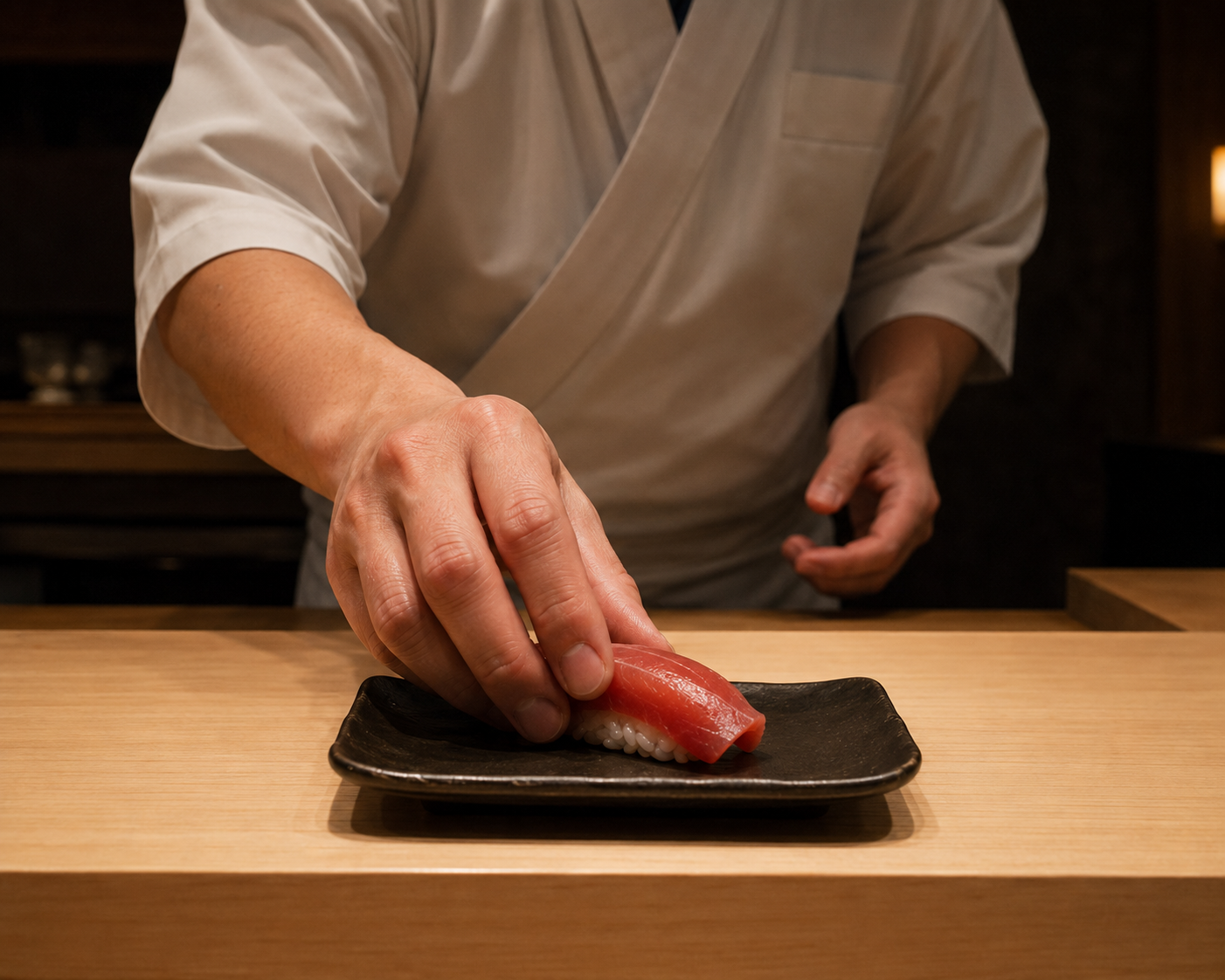
Omakase gets described as a tasting menu, a chef selection, or a set of premium sushi courses. None of those are quite right, and the gap between them and the actual meaning explains why some omakase meals feel like a different category of dining and others feel like an expensive set menu with a Japanese name attached.
The literal translation
Omakase meaning comes from a phrase used when handing a decision to someone else. Said in a restaurant it amounts to leaving it up to you, and the you is the chef. It is not a menu heading in origin. It is something a guest says.
That distinction carries into how the meal works. Ordering omakase is not selecting an item. It is declining to select, and agreeing to eat what the person behind the counter decides is worth serving that day.
What it means in practice
There is no printed list. The chef looks at what came in that morning, what has been aging and for how long, what is at its best right now, and builds a sequence from it. Two people eating the same omakase a week apart can share very few pieces in common.
Anyone asking what is omakase is usually really asking what they will be served, and the honest answer is that nobody knows in advance, including the chef, because it depends on the market. That uncertainty is the format rather than a flaw in it.
What actually decides the courses
Three things, in roughly this order. What arrived and how good it is. What is in season, since the same species carries different fat content at different points in the year. And what has been held to age, because several fish read better after a controlled rest than they do the day they were landed.
A kitchen working this way cannot commit to a fixed list without either wasting good product or serving something past its point. The format exists to solve that problem, not to add mystery to the meal.
How a meal is sequenced
The order is deliberate even though the contents are not fixed. Lighter, leaner preparations open the meal while the palate is clean. Fattier and stronger cuts follow once you are settled. Something hot or grilled usually breaks the run partway through. A rice dish and a dessert close it out.
Reversing that would flatten the early pieces, since rich fish leaves a coating that a lean white fish cannot cut through. The sequence is doing real work, which is why omakase is served in a set order rather than brought out as it is ready.
Where it sits against similar formats
The table below places omakase beside the things it gets confused with.
| Format | Who decides the courses | How fixed the menu is |
| Omakase | The chef, on the day | Changes with the market, often week to week |
| Tasting menu | The kitchen, in advance | Set and printed, repeated nightly for a season |
| A la carte | The guest | Fixed list, available whenever it is on the menu |
| Kaiseki | The chef, within a set structure | Course order is traditional, contents are seasonal |
| Chef special | The kitchen, for one dish only | A single item added beside a regular menu |
The line worth noticing is the one between omakase and a tasting menu. A tasting menu is designed once and then executed repeatedly. An omakase is designed on the day and executed once. Both can be excellent. Only one of them changes when the weather does.
Why the price varies so widely
Omakase covers a huge range, from modest counters to some of the most expensive meals available anywhere. The format does not set the price. The product does.
Course count, the grade of fish, how much of it is rare or seasonal, and how much labor sits behind each piece all move the number. A longer omakase is not automatically better than a shorter one, and a shorter sequence built from excellent product often reads stronger than a long run of ordinary pieces.
What to say when booking
Allergies and hard dietary limits should be given at the time of booking rather than on arrival. The sequence is built around them, and a chef told in advance can plan a different piece rather than pulling one out mid meal and leaving a gap.
Strong dislikes are worth mentioning too, though it is better to name one or two than to hand over a long list, since each exclusion narrows what the format can do. Someone who wants to rule out most of the menu is better served ordering directly from it.
Counter etiquette
Arrive on time. Courses are timed to the counter, and a late seat pushes everyone else out of sequence. Eat each piece as it arrives rather than letting it sit, since most are served at a specific temperature that starts changing immediately.
Nigiri is fine to eat with your hands. If a piece arrives already seasoned, brushed or torched, it is meant to go straight in without soy. Photographs are usually welcome, taken quickly.
Whom the format suits
It works best for people who want to eat something they would not have picked, and who are comfortable not knowing what is coming. That is a real preference rather than a level of expertise, and plenty of experienced diners still prefer choosing for themselves.
It is a poor fit for a table on a schedule, since the pace is set by the counter, and for anyone with a long list of exclusions. In both cases ordering directly from the menu produces a better meal than a sequence built around constraints.
The common misconception
Omakase is often read as a luxury tier, the expensive option above the regular menu. In its own terms it is closer to a working arrangement between a guest and a kitchen: the guest gives up the ability to choose, and in exchange gets access to whatever is genuinely best that day, including product that never reaches a printed menu because there was only enough for a handful of servings.