

Salmon Nigiri: Cut, Fat and Rice Temperature
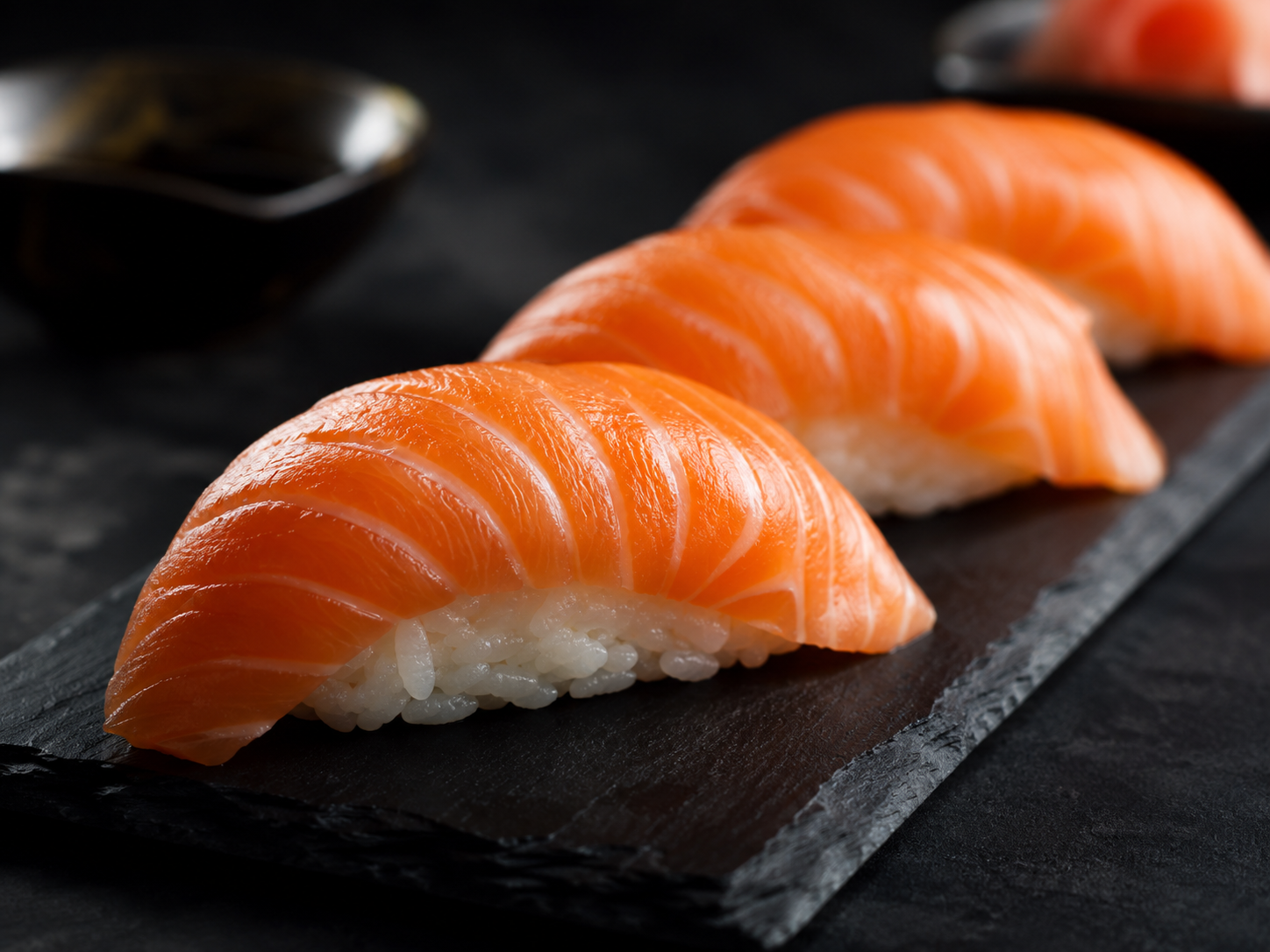
Salmon nigiri is the piece almost everyone starts with, and it is the piece most people stop thinking about afterward. It is mild, it is soft, and it is on every menu, which makes it easy to treat as the safe option. It is also one of the harder pieces to make well, because there is nothing sharp or complicated in the flavor to cover a mistake. The fat, the cut and the rice have to line up, and when one of them is off, salmon shows it immediately.
What the piece is
A slice of salmon laid over a small oval of hand pressed, vinegar seasoned rice, usually with a thin layer of wasabi between them. On a Japanese menu it appears as sake, which is the word for the fish rather than the drink. The proportions are the same as any other nigiri, roughly fifteen to twenty grams of rice under a slice cut to sit across the top rather than perch on it.
Where the cut comes from
Salmon is not uniform. The fat content changes from the back of the fish to the belly and from the head end to the tail, and a slice taken from one section eats nothing like a slice taken from another.
Loin and belly
The loin gives firmer slices with visible white lines of fat running through the flesh. It holds its shape well and reads clean. The belly is looser, considerably fattier, and closer to melting once it hits warm rice. Both work, but they are different pieces, and a kitchen that treats them as interchangeable is not paying attention.
Cuts are usually taken on an angle against the grain. That angle does two things: it gives the slice enough surface area to drape over the rice, and it shortens the muscle fibers so the piece gives way cleanly rather than stringing apart as you bite.
Fat and how it reads
Those white lines running through a salmon fillet are the reason the fish suits raw service. Fat softens on contact with warm rice, which is why the same slice tastes richer on nigiri than it does eaten on its own as sashimi.
There is a limit. Past a certain point the fat coats the mouth and flattens everything that follows, which is why very fatty salmon is often cut a little thinner or finished with citrus or salt to pull it back into balance.
Farmed and wild salmon for raw service
Most salmon nigiri is farmed, and that is a deliberate choice rather than a compromise. Farmed salmon carries more fat, has a softer texture, and comes with a controlled feed history, all of which suit raw preparation. Wild salmon is leaner, firmer and more variable in flavor, which reads better cooked than it does sliced thin over rice.
Salmon intended for raw service is also frozen to a set temperature for a set period before it is used. This is standard practice across the industry and does not affect the eating quality when it is done properly with equipment built for it.
Why rice temperature decides the piece
This is the part that separates a good piece from a forgettable one, and it is invisible on the plate. Rice for nigiri is held close to body temperature. Cool salmon meeting warm rice softens at the point of contact, and that softening is most of what people describe as the texture of a good piece.
Refrigerated rice does the opposite. Cold hardens the starch, the grains stop releasing, and the fat in the salmon stays firm. The piece becomes two cold things stacked on each other rather than one thing. This is the main reason supermarket nigiri and counter nigiri taste so far apart even when the fish itself is similar.
Common styles
The table below covers the versions that show up most often.
| Style | What changes | How it eats |
| Plain | Nothing beyond wasabi and the rice | Clean and soft, the baseline version |
| Seared | Surface passed under a flame | Smoky edge, fat partly melted, softer overall |
| Citrus finished | Yuzu or lemon over the top | Brighter, cuts through the fat |
| Belly cut | Fattier section of the fish | Richer and looser, close to melting |
| With onion | Thin sliced onion and a sauce | Sharper, aimed at people who find plain salmon mild |
| Roe topped | Salmon roe added on top | Salty bursts against the soft slice underneath |
How to eat it
Pick the piece up with your hands if that feels easier, turn it, and touch the salmon side to the soy rather than the rice. Rice soaks up soy in about a second, breaks apart in the dish, and brings far more salt than the piece needs.
Eat it in one bite. If the piece arrives already seared, salted or finished with citrus, skip the soy entirely, because the seasoning was set by the person who made it and adding more only flattens the fat that the finish was there to balance.
Signs of a well made piece
Color is the first thing to look at. Good raw salmon runs a clean orange with distinct white fat lines and a light sheen. A dull gray cast along the edges of the slice means it has been cut and left sitting, and a slice that looks wet rather than glossy has usually been through a temperature swing it should not have.
Shape is the second. The rice should read as an oval that holds together, not a compressed brick and not a pile that is already coming apart on the plate. If the slice hangs well past both ends of the rice, the cut was taken without reference to the piece it was going on.
Where it fits in an order
Salmon sits early in most sequences. It is soft, mild and does not carry over into the next piece, which makes it a reasonable opener and a reliable point of comparison for everything that comes after. Ordering it late works too, though after a run of stronger fish the mildness that makes salmon approachable can read as flat.