

Sashimi Explained: Cuts, Fish Selection, and How It Is Eaten
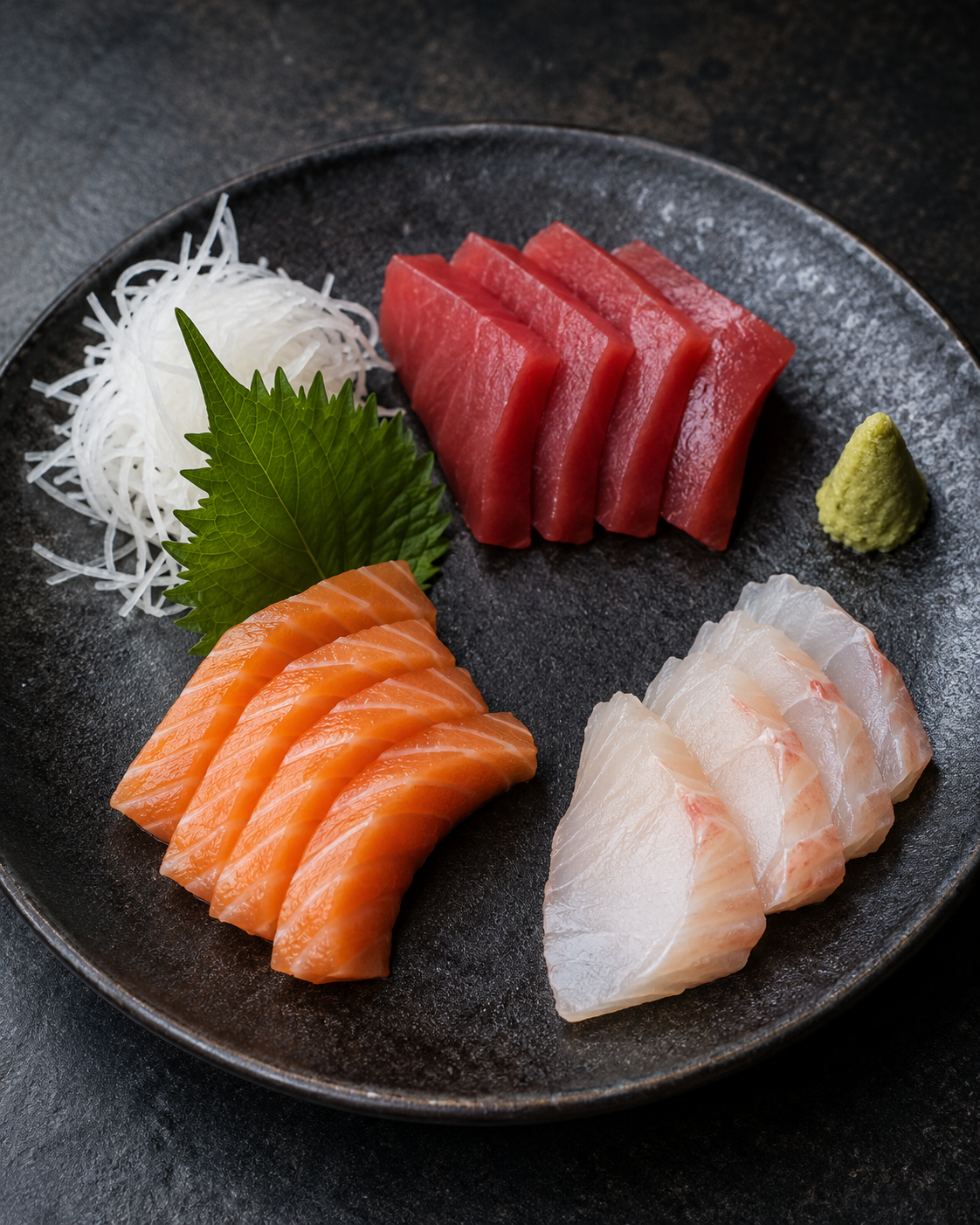
Sashimi is the simplest thing a Japanese kitchen puts on a plate and the hardest one to fake. Raw fish, sliced, arranged, served. There is no rice under it, no sauce over it and no wrapper around it, which means every decision made before it reached the table is visible. Anyone asking what is sashimi gets a one line answer and then finds that almost everything interesting sits in the decisions rather than the definition.
The word and what it points at
The name translates roughly as pierced flesh. The usual explanation traces it to an old practice of attaching the tail or fin of the fish to the plated slices, so a diner could tell which species they were eating once the recognizable parts were gone.
What matters is that the name refers to the cutting rather than to the fish. Sashimi is a preparation. That is why it can appear as beef, as chicken in some regions, and as vegetables, though seafood is what most menus mean by it.
Why the cut carries the dish
With nothing else on the plate, texture comes entirely from thickness and angle. A slice cut a millimeter too thick eats rubbery. The same fish cut too thin loses all resistance and reads as slack. Neither has anything to do with freshness, which is the usual thing blamed when a plate of sashimi does not land.
Direction matters as much as thickness. Slices are taken across the grain so the muscle fibers are shortened, which lets the piece part cleanly under the teeth instead of stringing apart. Cutting with the grain on the same fillet produces something chewy from fish that was in good condition.
The main cut styles
Different fish need different treatment, and the styles below cover most of what appears on a plate.
| Cut style | What it looks like | Fish it suits |
| Hirazukuri | Thick rectangular slices, the default | Tuna, salmon, yellowtail |
| Usuzukuri | Sliced thin enough to see the plate through | Firm white fish such as fluke and sea bream |
| Kakuzukuri | Small cubes rather than slices | Tuna and other dense, soft fish |
| Sogizukuri | Cut at a shallow angle for a wider slice | Delicate fish that would break in a thick cut |
| Itozukuri | Thin strips close to matchsticks | Squid and small silver fish |
The knife does the work
Sashimi is cut with a long single bevel blade, drawn through the fish in one pull from heel to tip. The length is the point. A single stroke leaves a smooth face on the slice, while a shorter blade forces a sawing motion that tears the surface and leaves it dull.
That smooth face is not only cosmetic. A torn surface releases moisture and the slice loses definition within minutes on the plate. This is why sashimi is cut to order in a kitchen that takes it seriously, rather than sliced in advance and held.
The fish that show up most
Tuna covers several products rather than one. Lean tuna is firm and clean, medium fatty is softer and richer, and the fattiest cut is close to melting at room temperature. Salmon is fatty and mild, which makes it the common starting point for people new to the dish.
Yellowtail sits between the two, buttery with a slight firmness. White fish such as fluke and sea bream are lean and delicate, which is why they are sliced thin. Squid, scallop, sweet shrimp and sea urchin round out most plates, and each one is handled differently depending on how much structure it has to begin with.
What comes alongside
The extras on a sashimi plate are functional rather than decorative. Shredded daikon resets the palate between species so the flavor of one does not carry into the next. A shiso leaf adds a sharp herbal note and separates slices that would otherwise stick together.
Wasabi belongs on the fish rather than in the soy dish. Stirred into liquid it loses most of its heat within a minute and turns the soy cloudy. Placed directly on a slice it holds. Soy is for dipping one edge, not for soaking the piece, since a thin slice absorbs quickly and salt then covers everything the cut was meant to show.
Temperature and aging
Sashimi is served cool but not cold. Fish taken straight from refrigeration has firm fat that reads waxy, and the flavor stays locked up. A short rest before slicing brings it closer to the range where fat softens and the taste opens.
Not all fish is served immediately after being caught either. Several species, tuna among them, are held for a period under controlled conditions, which changes the texture and deepens the flavor. Freshest is not automatically best, and a kitchen that ages properly is making a deliberate choice rather than serving old fish.
How to eat it
Chopsticks, one piece at a time, dipped lightly on one edge. Work through the plate in the order it was arranged if there is one, since plates are usually built from lighter fish toward richer, and going backward flattens the lighter pieces.
Leave gaps. Sashimi rewards eating slowly, and clearing a plate quickly turns a set of distinct textures into a single impression of cold fish.
Judging a plate before you eat it
Surface is the first thing worth looking at. A well cut slice has a slight sheen and holds a defined edge. A slice that looks matte along the cut face, or one sitting in a small pool of its own liquid, was cut early or cut badly, and the texture will follow.
Arrangement is the second. Slices should sit apart rather than piled, since stacked pieces trap warmth against each other and stick. A plate that has been built with space in it is usually a plate that was built to order.
When to order it
Order sashimi first in a meal and order it at a place you have not tried before. It is the clearest read available on both the fish and the person cutting it, and nothing on the plate is there to soften the answer.