

Sushi and Sashimi Compared, Plus Where Nigiri Fits In
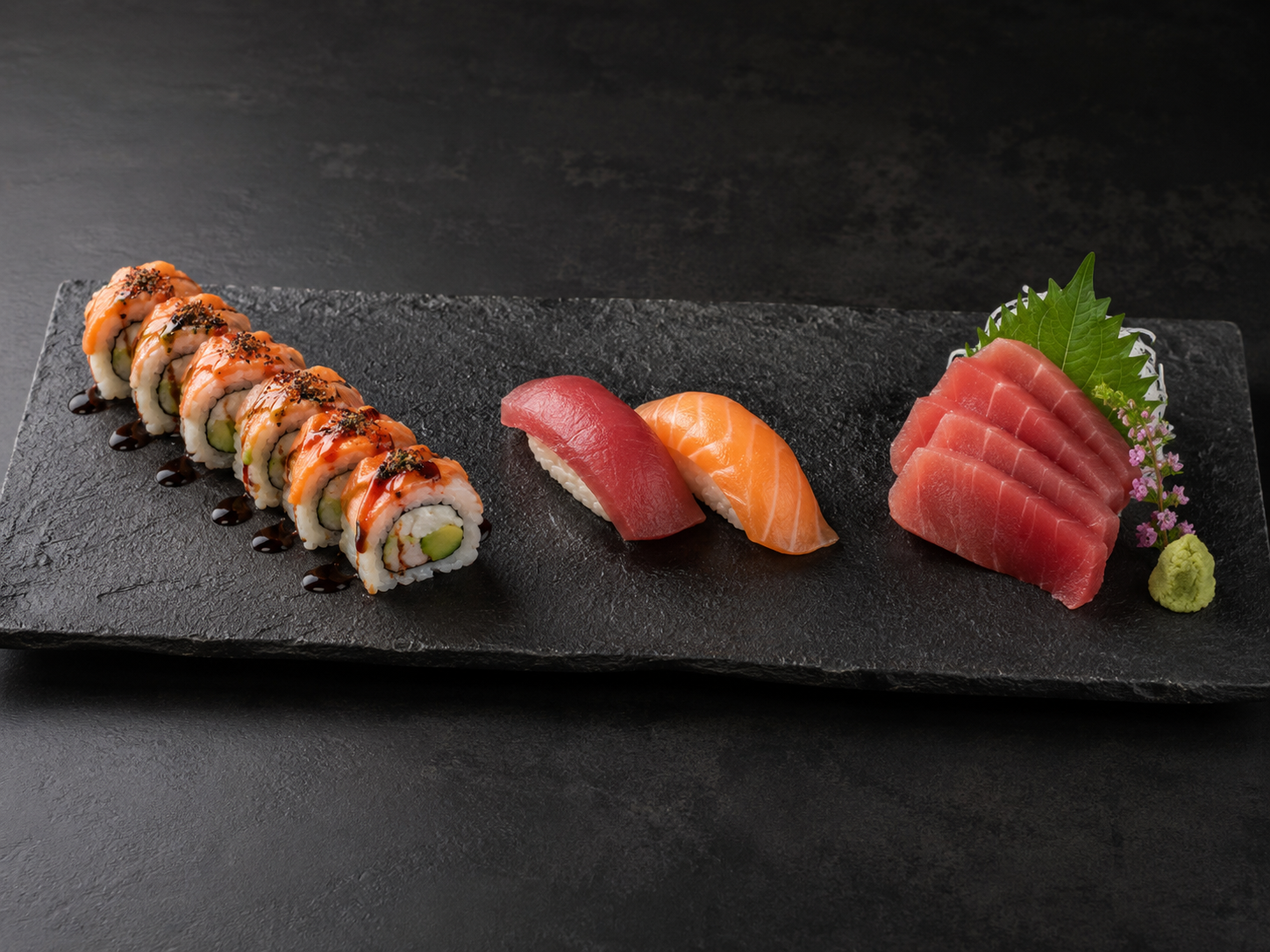
Two people order at the same restaurant. One asks for sushi and gets rolls with rice. The other asks for sashimi and gets slices of raw fish on a bare plate. Both assume they ordered a version of the same thing, and both are half right. The sushi vs sashimi question has a clean answer, and it has nothing to do with how raw the fish is.
The definition that clears it up
Sushi means seasoned rice. That is the entire definition. Rice cooked, then folded with vinegar, salt and sugar while hot, is sushi rice, and any dish built on it is sushi.
Sashimi means sliced fish. No rice is involved at any stage. The word points at the cut and at nothing else.
Run those two definitions against each other and the difference between sushi and sashimi stops being confusing. One is defined by a starch, the other by a knife. They can appear on the same table and even use the same fish, but they are not two versions of one dish.
What actually counts as sushi
Sushi is a family rather than a single item, and most of the family does not look like what people picture. Rolled pieces with rice on the outside are sushi. Rolls with the rice on the inside are sushi. Cone shaped hand rolls are sushi. A bowl of seasoned rice with fish scattered across the top is sushi. Fried tofu pouches stuffed with rice and no fish at all are still sushi, because the rice is there.
This is why a vegetarian can eat sushi without difficulty and why plenty of sushi contains no raw fish whatsoever. Cooked eel, cooked shrimp, egg omelette and cucumber are all standard fillings. Raw fish is common in sushi. It is not what makes something sushi.
What sashimi is
Sashimi is fish sliced and served on its own, usually with shredded daikon, a shiso leaf and a small amount of wasabi. Soy sits in a separate dish and the guest seasons each piece.
Because there is no rice underneath, the slices are cut thicker than they would be for a piece of nigiri. They have to hold their own shape and give some resistance when you bite, since nothing else on the plate is providing texture. Cut style shifts with the fish: soft, fatty species get thicker rectangular slices, while firm white fish gets sliced considerably thinner.
Sashimi is also the most exposed thing a kitchen serves. There is no rice, no sauce and no wrapper. Anything wrong with the fish or the knife work shows immediately, which is why sashimi is the fastest way to judge a place you have not eaten at before.
Why the two get confused
The mix up is an English language problem rather than a Japanese one. In everyday use outside Japan, sushi has come to mean raw fish, and once that association sets, sashimi looks like a subcategory of sushi rather than something separate.
The habit is understandable, since most Western sushi restaurants serve sashimi and most of their sushi does contain raw fish. It still leads people to say things like sashimi vs sushi as though comparing a part against the whole, when the two sit side by side rather than one inside the other.
Where nigiri sits
Nigiri is the piece that makes the boundary visible. A slice of fish over a small oval of hand pressed rice, which means it has rice, which means it is sushi. Take the rice away and the same slice, cut thicker, becomes sashimi.
So the three way question of sushi vs sashimi vs nigiri sorts out like this. Sushi is the category. Nigiri is one format inside it. Sashimi sits outside the category entirely.
Side by side
The table below sets the three against each other on the points that matter when you are ordering.
| Sushi | Sashimi | Nigiri | |
| Seasoned rice | Yes, by definition | None | Yes |
| Raw fish | Optional | Almost always | Usually |
| Is it a category | Yes, a whole family | No, a single preparation | No, one type of sushi |
| Seasoned by | The kitchen and the guest | The guest at the table | The kitchen, most of the time |
| Eaten with | Hands or chopsticks | Chopsticks | Hands or chopsticks |
| Typical role | Main body of a meal | Opening course | Runs through the meal |
What each one is good for
Order sashimi when the fish is the point. It is the cleanest read on quality and the best opener, because it leaves nothing behind on the palate for the next course to work around.
Order sushi when you want a fuller meal. Rice adds weight and structure, and rolls give the kitchen room to build combinations that a bare slice cannot carry. Order nigiri when you want the fish to lead but still want a complete bite.
Sequence matters more than people expect
If you are having more than one of these in a sitting, the order changes the result. Sashimi first, while nothing has coated the palate. Nigiri after that. Rolls last, since they usually carry the strongest seasoning on the table.
Reverse the sequence and the sashimi reads flat. It is not the fish that changed. Vinegar, soy and sauce have already set a baseline your mouth is measuring against, and a plain slice cannot compete with that.
One practical difference at the table
Sashimi is a chopstick dish and always has been. Sushi is more forgiving, and nigiri in particular is often easier with your hands, since chopsticks tend to squeeze the rice out of shape. If you are dipping a piece of nigiri, turn it and touch the fish to the soy rather than the rice, which soaks up liquid instantly and falls apart in the dish.