

Tuna Carpaccio: Thin Sliced Raw Tuna Explained
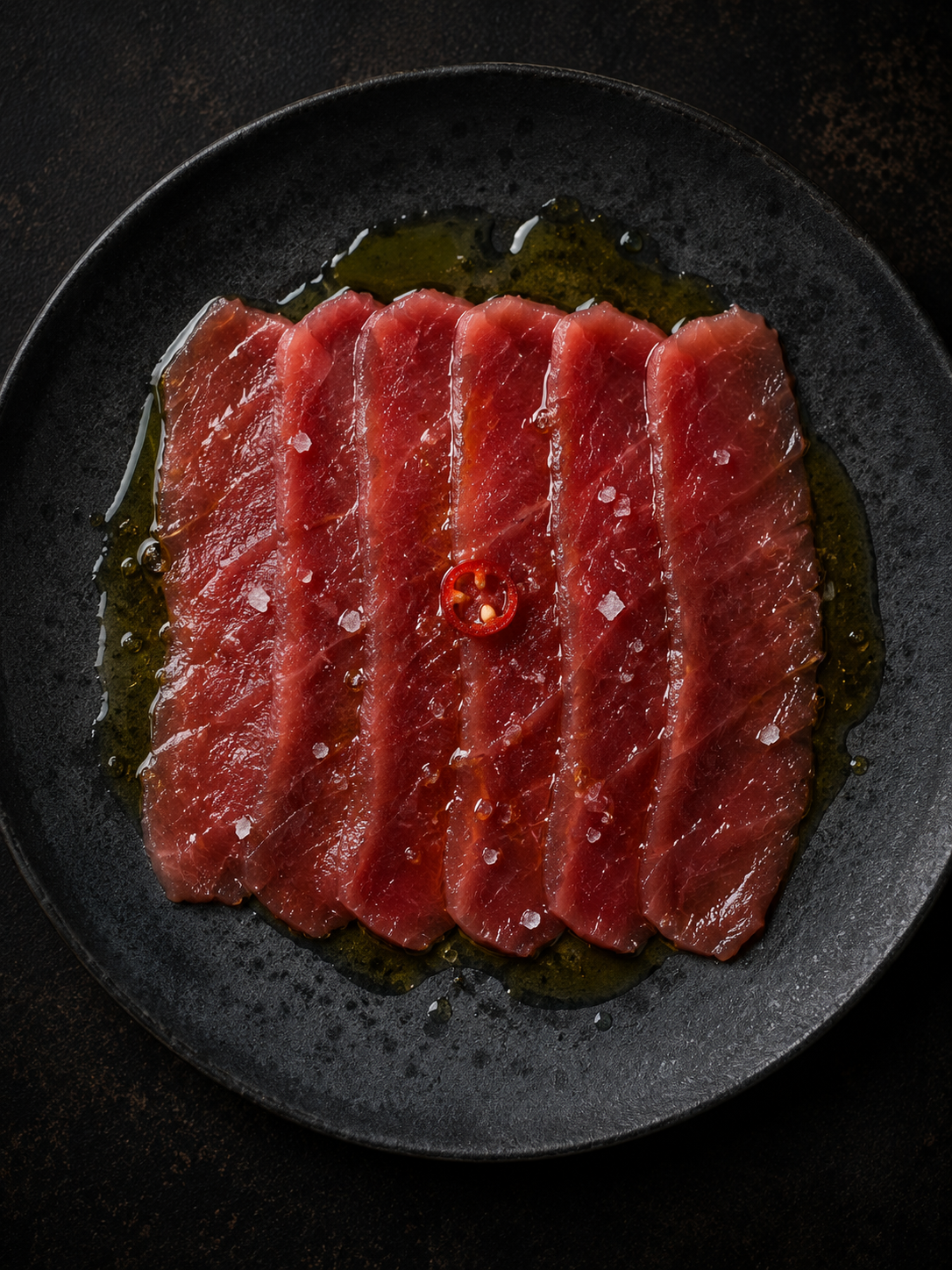
Tuna carpaccio sits in an odd place on a Japanese menu. The fish is Japanese, the knife work is Japanese, and the technique behind it came out of a bar in Venice. It reads as a hybrid because it is one, and the reason it works is that the Italian method happens to suit tuna better than it ever suited the beef it was invented for.
Where the dish comes from
The original was made in Venice in 1950 with raw beef, sliced thin and dressed with a pale sauce. It was named after a Renaissance painter known for heavy reds, which is the sort of detail that sounds invented and is not. The format spread, the beef became optional, and by the time it reached seafood kitchens the name had come to describe the technique rather than the ingredient.
Anyone looking up what is tuna carpaccio is really asking about that technique: raw protein sliced thin enough to sit flat, dressed with oil, acid and salt, and served cold on a plate rather than over rice.
How it differs from sashimi
This is the distinction most people want cleared up, and it comes down to two things: thickness and seasoning.
Sashimi is cut with weight. The slices are thick enough to hold their own shape and give resistance when you bite, and they arrive unseasoned so you can adjust with soy and wasabi at the table. Carpaccio goes the other way. The slices are cut thin enough to lie flat and translucent, and they reach you already dressed, because at that thickness the fish cannot carry itself alone.
The result is a different eating experience from the same fish. Sashimi gives you texture first and flavor second. Carpaccio flips that, since a thin slice releases its flavor immediately and has almost no chew.
The cut and the slicing
Tuna is well suited to this because the flesh is dense and holds together at thin gauges where softer fish would tear. The block is trimmed square first, then sliced against the grain with a long blade in a single pull rather than a sawing motion, since sawing leaves a ragged edge that shows on a thin slice.
Getting the thickness right
The target is somewhere around two to three millimeters, thin enough to see the plate through the slice at the edges. Some kitchens slice slightly thicker and then press the slices gently between sheets to flatten them out further, which widens the piece without tearing it.
Temperature does most of the work here. Tuna that has been chilled firm slices cleanly. Tuna at room temperature drags on the blade and comes off in uneven pieces.
Which tuna to use
Lean tuna, known as akami, is the standard choice. It has a clean flavor and enough density to hold a thin slice together, and the dressing has room to work against it. Medium fatty tuna also suits the dish, though the fat softens the slice and makes the knife work harder.
Very fatty tuna is usually left out. At carpaccio thickness the fat dominates, the slice loses structure, and the oil in the dressing has nothing to contrast with. That cut earns its place on nigiri instead.
Whatever the grade, the fish has to be handled for raw service from the moment it is landed, which means correct temperature control throughout and, for most species, a period of deep freezing before it is used.
Dressings and finishes
The base is oil, acid and salt. Olive oil is the Italian half of the dish, and it carries flavor across the surface of a slice that is too thin to hold anything heavy. Acid comes from citrus, usually yuzu or lemon, and it firms the surface of the fish slightly on contact.
From there the finishes vary. Flaked salt for texture, thin sliced chili for heat, capers for a sharp salty note, a light soy or ponzu where the kitchen wants to pull the dish back toward Japan. Restraint matters more than the specific list, since anything heavy sits on top of the slice instead of working with it.
Related preparations
The table below places carpaccio alongside the dishes it gets confused with.
| Dish | How the fish is cut | What is added |
| Carpaccio | Sliced very thin, often pressed out flat | Oil, acid and salt, dressed before serving |
| Sashimi | Thicker slices with weight to them | Nothing on the fish, soy and wasabi at the table |
| Tataki | Thick slices from a briefly seared block | Ponzu or citrus soy, usually with aromatics |
| Crudo | Slices or chunks, thickness varies | Oil, citrus and salt, close to carpaccio |
| Tartare | Diced small rather than sliced | Mixed with seasoning before plating |
Making a version at home
A workable tuna carpaccio recipe is short. Start with a block of tuna sold for raw service, chill it until firm, and slice thin against the grain with the longest sharp knife available. Lay the slices flat on a cold plate without overlapping them.
Dress just before serving with good olive oil, a squeeze of citrus and flaked salt. Add one accent at most. The common mistake is dressing early, since acid keeps working on a thin slice and turns the surface opaque and firm within a few minutes.
Plating
Because the slices lie flat, the plate becomes part of the dish in a way it is not with sashimi. Slices are laid out in a single layer, edge to edge or slightly fanned, with enough space that the dressing pools around them instead of running off. A cold plate holds the fish at temperature through service and stops the oil from going cloudy.
Anything added on top goes on sparingly and late. Herbs, chili and citrus zest are placed rather than scattered, and the plate is finished within a minute of it leaving the pass, since a dressed slice at this thickness does not hold for long.
When to order it
Carpaccio works early in a meal. It is light, cold and dressed brightly, which sets up heavier courses without leaving anything behind on the palate. Ordering it after rich food tends to waste it, because the oil and citrus that make the dish read clean have nothing left to cut against.