

Yakitori Explained: Charcoal Grilled Skewers and Their Cuts
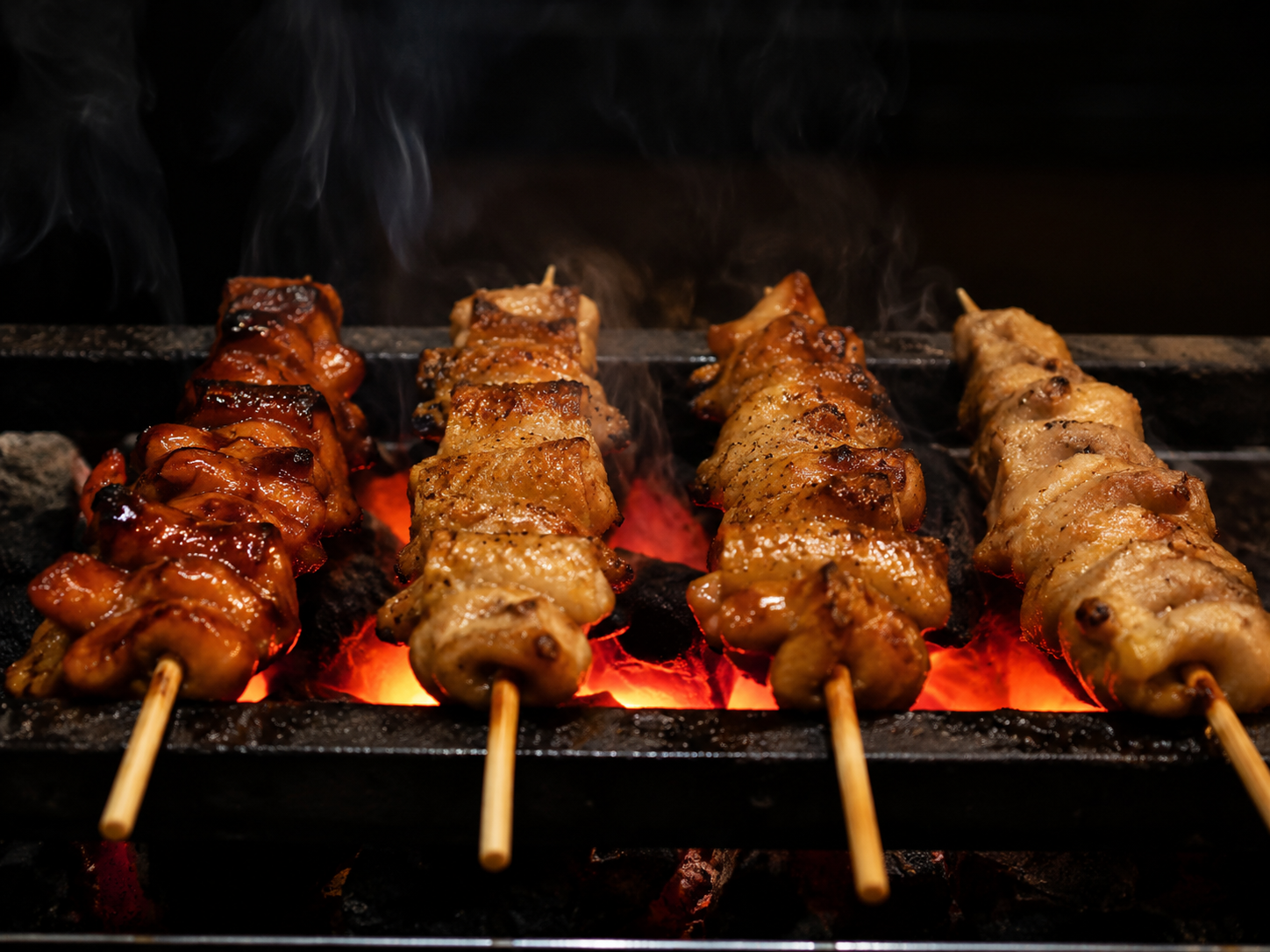
Yakitori looks like the least serious food in Japanese cooking. Small pieces on a bamboo stick, cooked over coals, eaten with a drink. There is no plating to speak of and the portions are tiny. What is hidden in that setup is a format built entirely around control, where the difference between a good skewer and a poor one comes down to about twenty seconds of judgment.
The meaning of the word
Yaki means grilled. Tori means bird. Put together, the word means grilled chicken, which is narrower than most menus outside Japan use it.
Anyone looking up what is yakitori will usually find it described as Japanese grilled skewers in general, and that broader use has become standard abroad. In Japan the word still points at chicken specifically, and a shop selling beef and seafood on sticks would call itself something else.
The wider category
That something else is kushiyaki, which means skewer grilled and covers everything. Beef, pork, seafood, mushrooms, asparagus and peppers all sit under it. Yakitori is one branch of kushiyaki rather than the whole tree.
The distinction is worth knowing when reading a menu. A list built around wagyu, shrimp and vegetables is kushiyaki even when the header says yakitori, and the cooking method is identical either way.
Where the format comes from
Skewered grilled chicken has a long history in Japan, but the version most people recognize took shape after the Second World War, when chicken became widely available and small grills appeared outside train stations and in alleys.
The setting shaped the food. Portions had to cook in minutes, cost little enough to order five or six, and be edible standing up with one hand occupied by a glass. Nothing about the format was designed for a dining room, which is why it still works best at a counter facing the grill.
Salt or glaze
Every skewer is seasoned one of two ways, and the choice is not decorative.
Shio means salt, and it is the honest option. Nothing sits between you and the meat, so it suits cuts where the flavor is worth tasting directly: breast, wing, skin and most seafood. It also suits anything fatty, since salt cuts richness rather than adding to it.
Tare is a soy based glaze built from soy sauce, mirin, sake and sugar, brushed on in layers during cooking so it caramelizes at the edges rather than sitting wet on the surface. It suits richer, darker cuts and anything that benefits from sweetness. In long running shops the same tare pot is topped up rather than replaced, and it deepens over years.
If a menu leaves the choice to you, salt first and glaze later is the safer order. Tare coats the palate, and a salted skewer eaten after a glazed one reads as underseasoned when it is not.
The cuts
A chicken yields far more than breast and thigh, and a yakitori counter uses most of it. The table below covers what turns up most often.
| Japanese name | What it is | How it eats |
| Momo | Chicken thigh | Juicy and forgiving, the everyday standard |
| Negima | Thigh alternating with scallion | Thigh plus a sharp vegetable note between pieces |
| Tsukune | Ground chicken meatball | Soft inside, glazed in layers, often served with egg yolk |
| Kawa | Chicken skin | Cooked long enough to go crisp, mostly texture |
| Tebasaki | Chicken wing | Crisp skin pulling back from the bone, salt suits it |
| Sunagimo | Gizzard | Firm and mineral, the chewiest thing on the list |
| Hatsu | Heart | Dense and clean, less strong than people expect |
| Nankotsu | Soft cartilage | Crunchy throughout, closer to a snack than a cut of meat |
Using the whole bird is not novelty for its own sake. Each cut has a different fat content and a different water content, which means each one needs a different distance from the coals and a different time on the grill. That variation is most of the skill.
Why charcoal changes the result
Binchotan is a Japanese white charcoal that burns hot, burns long, and gives off very little smoke or aroma of its own. That last part matters more than the heat. Since the charcoal contributes almost nothing, the only smoke reaching the food comes from its own fat dripping down and vaporizing on the way back up.
This is why a salted skewer off charcoal tastes different from the same skewer cooked in a pan with identical seasoning. The pan keeps the fat in contact with the meat. The grill turns it into smoke and sends it back through.
Heat control comes from positioning rather than from a dial. Skewers move closer to or further from the coals, and the person working the grill adjusts constantly. A skewer left thirty seconds too long dries out. One pulled early has fat that never rendered and skin that never crisped.
How to order and eat it
Two or three skewers a person works as a starter, five or six makes a meal. Order in rounds rather than all at once, since skewers are meant to arrive straight off the grill and lose most of their texture sitting on a plate.
Eat directly from the stick. Pulling pieces off with chopsticks is common outside Japan and is not wrong, though it tends to break the pieces apart. Start at the tip and work down.
Reading a counter before you order
The grill tells you most of what you need to know. Coals should sit as an even bed with a steady glow rather than open flame, since flame means fat is burning instead of smoking and the skewers above it are picking up soot.
Watch how often the skewers move. A counter where everything sits in one position for the full cook is working to a timer. A counter where pieces shift constantly between hotter and cooler zones is being cooked by someone paying attention, and that shows up in the skin more than anywhere else.
What to drink with it
Charcoal and smoke sit well beside beer, dry sake and lightly peated whiskey. A dry sake cuts through tare without competing with it, and a highball keeps the palate clear between richer cuts. Sweet drinks are harder to place, since tare already brings sugar to the table.